This blog was written by Cyril Brandt, Institute of Development Studies, UK; Samuel Matabishi, Institut Supérieur Pédagogique de Bukavu, DR Congo; and Gauthier Marchais, Institute of Development Studies, UK.
Preparing teachers for conflict-affected classrooms is a global urgency that receives too little attention. Most teachers enter their classrooms unprepared to deal with conflict-related tensions, sociopsychological well-being and trauma. Integrating Mental Health and Psychosocial Support (MHPSS) and Social Emotional Learning (SEL) into pre-service teacher training remains limited, despite growing global recognition of their importance.
Evidence from crisis-affected contexts shows that children’s psychosocial wellbeing is closely linked to improved concentration, attendance and learning outcomes. Strengthening MHPSS and SEL is therefore central to improving education quality in these settings.
Pre-service teacher training is a key institution that offers a scalable opportunity to streamline such approaches into nationwide curricula. Yet, as our recent presentation at the UKFIET conference has shown, few such initiatives exist and “the approach appears to be under evaluated and deserves more attention in the future”.
In the face of rapidly decreasing budgets for development cooperation, domestic solutions are needed now more than ever. Institutionalising pre-service teacher training with a conflict-sensitive focus requires institutions that are willing to innovate in the middle of insecurity, policy makers who recognize the urgency of the work and teacher trainers who are willing to integrate new insights on working around trauma, violence and fragile social relations.
Across Eastern Democratic Republic of Congo (DRC), teacher training institutes are beginning to take up this challenge. As part of a GPE-KIX funded project implemented during 2024–26, several teacher training colleges (Instituts Supérieur Pédagogique, ISPs) have started to develop and implement a teacher training module on conflict resolution, education in emergencies and trauma-sensitive pedagogy.
These activities have taken place amid a rapidly deteriorating security situation. Since January 2025, renewed armed escalation in eastern DRC and the takeover of Bukavu by M23 have significantly affected life privately and professionally. Initial workshops were postponed, travel was severely restricted and coordination required constant adaptation.
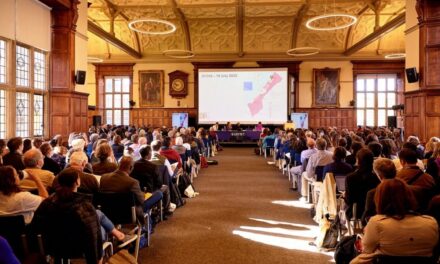
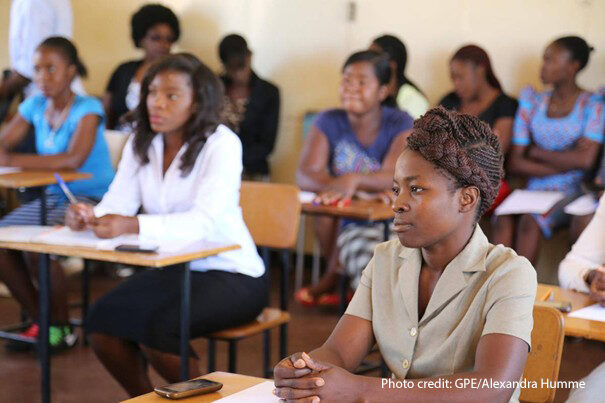
Recent workshops at ISP Bukavu focused on developing this pedagogy. Teacher educators reflected on how fear, loss and insecurity shape the daily realities of learners. Many spoke about the limits of traditional transmission-based methods in situations where students arrive in class already overwhelmed.
The workshops encouraged adaptations to lesson delivery, the integration of MHPSS principles into ordinary teaching routines and the strengthening of SEL approaches to create environments where learners can feel emotionally safer.
These discussions were not only theoretical. They drew on the experience of educators who confront trauma and instability in their classrooms every day.
Workshop participants engaged with conflict analysis, strategies for peaceful conflict resolution and approaches to teaching that acknowledge fragile social dynamics. Facilitators noted the high level of engagement and motivation among participants, which reflects a broader recognition that teacher preparation must address relationships, trust and coexistence in addition to subject knowledge.
The intention within the project is to integrate these themes into pre-service modules that are aligned with national standards but adapted to the realities of different regions.
In a workshop that took place in Kalemie, a city on the western shore of Lake Tanganyika, teacher educators stressed how urgently they need practical strategies for addressing conflict in their classrooms.
They shared examples of using literature to help learners reflect on non-violence and reconciliation, for example, drawing from Martin Luther King’s speeches, and described the usefulness of tools like the conflict tree for analysing local tensions.
Several spoke about the everyday violence they witness among students and the lack of guidance they currently have to respond.
Momentum from outside the project has also been encouraging. Several ISPs in Eastern DRC have independently contacted the team to express their wish to participate. This kind of proactive interest from institutions signals that the approach speaks directly to the challenges they face.
Political actors have shown interest as well: provincial Ministers of Education who attended the workshops expressed their commitment to supporting the project and emphasized that its scope should extend beyond schools to also strengthen the capacities of provincial political actors in conflict management and transformation.
At the national level, exchanges with the national-level Commission Permanente des Études, which oversees additions to teacher training curricula, have been fruitful. The possibility of formal integration into national teacher education guidelines is becoming more realistic.
However, scaling in this environment is not simply a question of developing training materials, organising additional workshops or lobbying.
The practical constraints are significant. Roads are often impassable, transportation costs are extremely high relative to institutional budgets and security risks can interrupt even the most basic activities. Moving teams between institutions is a considerable challenge.
The journey from Bukavu to Kalemie is a vivid example. A journey of what could be 385 kilometres recently took nine days due to insecurity, foreign invasion, collapsed infrastructure and election-related instability.
The team had to travel through Rwanda and Tanzania, navigate borders during politically tense moments and finally cross Lake Tanganyika by boat. Such logistical difficulties limit the frequency of institutional exchanges and make coordination slow and unpredictable.
Despite these obstacles, the project has begun to generate visible outcomes.
- Teacher educators report that they feel better equipped to understand and respond to the emotional dimensions of teaching in conflict.
- Institutions that previously worked in isolation are now establishing relationships based on shared needs and mutual learning.
- There is also growing interest among student teachers themselves, many of whom see these approaches as aligning more closely with the realities they will encounter once they begin teaching.
Scaling such an approach in Eastern DRC will always involve slow progress, physical barriers and constant adaptation. Yet the commitment shown by ISPs and the opening from policymakers suggest that there is space to move forward.
Progress in the real world does not always match project cycles. Sustained understanding and empathy from funders is a core condition to allow projects to proceed at their own pace.
We are thankful to GPE-KIX that they have been able to accommodate all changes and challenges that the project has gone through. If such support is given, our work can contribute to sustainably building a more resilient foundation for teacher education and, ultimately, for peace.
This KIX-supported work aligns closely with the country’s Partnership Compact, which identifies improving the quality of teachers and teaching as the country’s top priority for system transformation.
DRC aims to transform education through competent, motivated, and available teachers, recognising that better trained and better supported educators are essential to strengthening the learning environment, enhancing student performance, and building a more resilient education system.
The Partnership Compact also underscores that investing in teachers—through stronger pre-service and in-service training, professionalisation measures, and improved support systems—is expected to generate large-scale improvements in learning outcomes and accelerate national education reform.
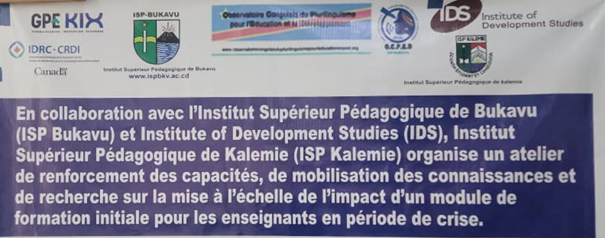
Figure 1: Banner used at the capacity building workshop in Kalemie, November 2025
References
ISP Bukavu : vers une pédagogie adaptée aux contextes de crise (29.09.25).
L’éducation à la paix : un levier de transformation (30.09.25).
Atelier sur l’enseignement en période de crise.
Acknowledgements
This study is part of the project Scaling the impact of a pre-service teacher training module for teachers in violent conflict, implemented by the Institut Supérieur Pédagogique de Bukavu in the Democratic Republic of the Congo, in partnership with the Institute of Development Studies in the UK. The project is supported by the Global Partnership for Education Knowledge and Innovation Exchange (GPE-KIX), a joint endeavour with the International Development Research Centre (IDRC), Canada.