
This blog was written by Mchungwani Rashid, Research Officer, African Population and Health Research Center (APHRC); and Davis Musyoki, Communication Officer, APHRC.
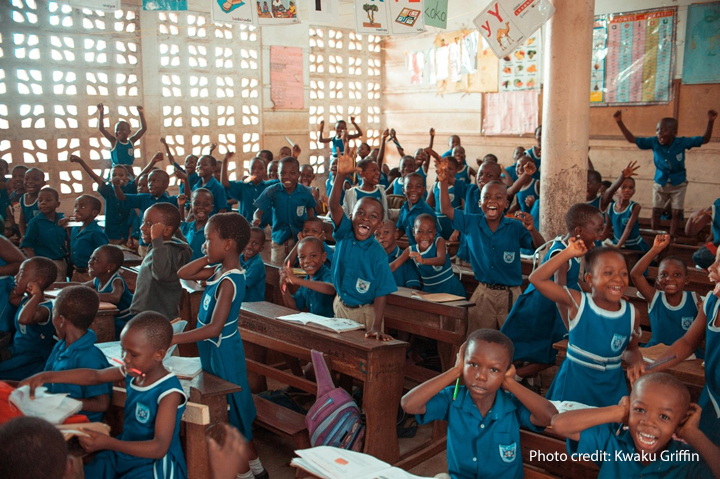
Every child deserves to walk through a classroom door and feel they belong. Yet for millions of children with developmental disabilities, that simple reality remains out of reach. They have always been here – in our communities, in our families, in our classrooms – and while education systems have made significant strides toward inclusion, much more remains to be done.
As the world works toward Sustainable Development Goal 4’s promise of inclusive and equitable quality education, a critical question demands an honest answer: are we truly delivering on that promise? Recent research by the African Population and Health Research Center (APHRC) on inclusive early learning in Kenya brings us face-to-face with that question. The findings offer a clear-eyed snapshot of where we stand today and a roadmap toward a future where every child truly belongs. But what does inclusion actually look like when the classroom door closes?
The ‘now’: What does inclusion look like in the classroom?
The study found a deep commitment to inclusion among educators, but also significant barriers. Teachers expressed a desire to support all learners, yet they felt ill-equipped. Three critical gaps were observed:
- The gap between presence and participation: While children with developmental disabilities were physically present in mainstream classrooms (a huge step forward from the past), they were often not genuinely participating. In one observation, a teacher mentioned, “Those kids in my class… are slow learners, I think, because you tried to teach them and for real they do not grasp the content.” Presence is not the same as inclusion.
- The gap in teacher preparation: When asked about their training, one teacher said, “We are just interacting with them without knowledge because we did not go to special training… not from any colleges, nor guidance from the county.” This sentiment was echoed across focus groups and education actors, as also noted from a special needs curriculum support officer, “The last time we trained… It’s been more than 15 years. We have not undergone any training.” This highlights a critical need for practical, classroom-based strategies and support.
- Assessment tools – gaps in identifying needs: School readiness assessments are critical for identifying children’s strengths, learning needs, and readiness to start school. However, in Kenya, most teachers rely on observation, classroom activities, and informal checklists. While practical, these approaches often fail to capture the needs of children with disabilities. One teacher described the challenge: “In ECD, most of the assessment area is oral. You ask a question, and they answer… when it comes time for assessment, ‘how old are you?’ the child just looks at you. So I cannot write anything.”
- The gap in family-school trust – navigating parental denial: While parents of children with developmental disabilities actively advocate for support, there are situations where families are reluctant to acknowledge or name their child’s additional needs. This dynamic was starkly illustrated by a teacher’s comment during a focus group: “The parent insisted that the child had no problems, but from the appearance, you can tell that the child has a problem.” This statement captures a painful tension at the heart of inclusive education. From the educator’s perspective, a child’s struggles are visible and urgent, demanding intervention and support. From the parents’ perspective, accepting a “problem” can feel like accepting a judgment on their child’s worth or a failure on their own part. Cultural stigma, fear of labeling, and lack of information about what support actually looks like can all fuel this denial.
- The gap between health, education, and community systems: Weak coordination between community, health, and education systems undermines follow-up support, leaving many children without timely interventions. Even when a child’s needs are identified in one setting, referral pathways often do not function well, meaning that identification rarely translates into action. As one education officer explained: “Special needs education is under the national government… pre-primary education is under the county government. So, the link between them is not coming out clearly.” This single quote exposes a profound structural disconnect. When responsibility for a child’s learning is split across levels of government with no clear mechanism for collaboration, the child disappears between the cracks.
Lessons learned and a path forward: The ‘always’
These findings, while highlighting challenges, also illuminate a clear path toward a more inclusive ‘always” The findings underscore that school readiness is not just about the child; it requires a ‘ready school’ and a ‘ready family and community’. Efforts to promote inclusion must therefore address systemic gaps across four areas:
- Inclusive assessment tools: Current approaches to identifying developmental needs are often inadequate or disability exclusionary. We must develop and deploy standardised, disability responsive, and culturally relevant assessment tools for early childhood. Without accurate identification that respects both the child’s context and the family’s perspective, children who need support will remain invisible to the systems designed to help them.
- 2. Teacher training and support: Teachers are on the front lines of inclusion, yet they consistently report feeling unprepared. Pre-service and in-service training must move beyond theory to equip educators with practical skills in identifying and supporting children with diverse learning needs. This includes classroom-based strategies, understanding neurodiversity, and building confidence in adapting instruction.
- Family engagement: Parental denial, as voiced by the educator in the study, is often rooted in fear, stigma, or a lack of information. We must invest in programmes that educate parents and caregivers about developmental milestones, the value of early intervention, and the reality that support services are not a label of failure, but a pathway to thriving. Engagement must be empathetic, not judgmental.
- Community and system strengthening: No single sector can deliver inclusion alone. We urgently need improved coordination between health, education, and community systems. This means breaking down silos, addressing the economic barriers that prevent families from accessing services, and tackling the deep-seated stigma that still surrounds disability in many communities.
A message for the future
The children with developmental disabilities are not waiting for a future where they can belong. They are ‘here’ now. They are in our communities and ready to learn. The question for us – as educators, policymakers, and researchers – is whether we are ready to build education systems that are ready for them.
Let us honor the ‘then’ by acknowledging the long fight for recognition. Let us be honest about the ‘now’ by listening to teachers’ and families’ experiences. And let us commit to building the ‘always’ – an inclusive future where every learner is not just present, but participating, valued, and thriving.

I think this excerpt raises an essential question about whether educational inclusion is truly being practiced beyond policies and public promises. It is encouraging that more attention is being given to children with developmental disabilities, but the passage also makes it clear that access alone is not enough if students still feel excluded once they enter the classroom.
Interesting observations. The issue of parental acceptance is deeply rooted in culture. How can we convince parents to allow their child to receive an honest assessment of their abilities? I think we need more sensitization in this area.