
This blog is written by Dr Abdimalik Ibrahim Farah, Research Officer at the African Population and Health Research Center (APHRC), Nairobi, and a PhD candidate at Kenyatta University.
New research from Kenya’s refugee and host community schools reveals a troubling paradox: teachers with extraordinary dedication working within a system of extraordinary neglect.
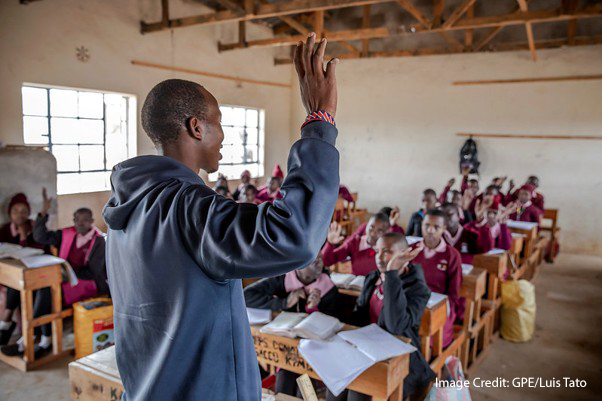
Picture a teacher in Turkana County. She wakes before dawn, prepares her own children – often in a household of seven – and walks to a classroom where 90 students wait. She holds no registration with Kenya’s Teachers Service Commission (TSC). Her monthly salary is KSh 9,000 or less. She has never received structured mental health training. And yet, when asked why she keeps coming back, she speaks of purpose, of the children, of a calling.
This is not an exceptional story. It is the norm.
The TeachWell Teacher Well-Being study
The TeachWell Teacher Well-Being study, a comprehensive mixed-methods study conducted by the African Population and Health Research Center (APHRC), surveyed 927 teachers across 74 schools in Garissa and Turkana Counties and interviewed 105 respondents. Its findings were validated at a two-day workshop in April 2026 with representatives from Kenya’s Ministry of Education (MoE), the TSC and consortium partners – and they paint a picture that is both inspiring and deeply concerning.
A 91% motivation score – and a system that barely notices
The study’s composite intrinsic motivation index stands at 91% – one of the highest recorded in any comparable education context. More than 90% of teachers report going beyond their formal duties, creating extra learning opportunities and maintaining regular communication with parents and caregivers.
But motivation is not the same as wellbeing. Behind that remarkable figure lies persistent psychological distress – including documented episodes of suicidal ideation – moderate-to-high retention risk, and a workforce stretched far beyond its means. Teaching in these contexts is often sustained not by systemic support, but by moral purpose and the absence of alternatives.
The numbers behind the neglect
The structural inequalities between TSC-registered and non-TSC-registered teachers, documented in the study, are stark:
- 0% of refugee teachers hold TSC registration, compared to over 92% of their national counterparts.
- 94–97% of non-TSC-registered teachers earn KSh 9,000 or less per month; 66–73% of TSC-registered teachers earn KSh 30,000 or more.
- Over 88% of non-TSC-registered teachers are on one-year contracts, with no pathway to career progression – cases of 17 years in a single job grade were documented.
- Average class sizes for non-TSC-registered teachers range from 88 to 92 learners; 25% manage over 100 students.
- Pay dissatisfaction is reported by 89% of non-TSC-registered men and 86% of non-TSC-registered women.
When gender makes everything harder
Female non-TSC-registered teachers carry a disproportionate share of the burden. They live in the largest households (median of seven members), have the highest rates of household disability (25%), and the least access to supplementary income (2.8%). Yet 58% identify as primary income providers for their families. Pregnancy and maternity are treated as professional liabilities: discriminatory recruitment practices were documented, alongside a near-total absence of breastfeeding infrastructure.
Mental health: Awareness without support
Teachers can identify signs of distress in their colleagues and students, but their own mental health support systems are fragile. Training is typically delivered in one or two-day externally facilitated sessions, often without certification or follow-up. Peer support – the most accessible buffer – is compromised by confidentiality fears and gender norms. Formal referral systems are more robust in refugee camp settings than in host communities, a counter-intuitive finding that leaves host-community teachers particularly exposed.
What the validation process revealed
At the April 2026 workshop, MoE and TSC representatives did more than nod along. TSC County Directors for Garissa and Turkana confirmed that 0% of refugee teachers currently hold TSC registration, while affirming that registration pathways exist under current legal frameworks – and calling for clarity on how refugee schools can be formally recognised to unlock those pathways. MoE representatives aligned the study’s findings with the Ministry’s 2027 Strategic Plan and the national teacher wellbeing framework. They also made an important terminological point: classifying teachers as ‘TSC-registered’ and ‘non-TSC-registered’ is both more legally accurate and more policy-actionable than ‘refugee’ or ‘national’ categories.
The call to act
The evidence is clear and validated. The windows of policy opportunity are open: the National Teacher Education and Training Policy, the TSC Act 2024, and the Basic Education Act 2024 all offer concrete entry points for reform. What is needed now is the political will to walk through them – starting with formalising pathways for non-TSC-registered teachers, establishing gender-responsive working conditions, and institutionalising mental health support beyond one-off workshops.
These teachers show up every day. It is time for the system to show up for them.
Related reading: Resign to be safe: How Kenya’s transfer system is pushing teachers out of refugee schools