This blog was written by Daniel Lavan and Megan Silander (Education Development Center), Paul Awosina and Imtiaz Ridoy (Street Child).
In recent years, global education discourse has shifted from a focus on expanding access to schooling towards improving the quality of teaching and learning outcomes. Local-global partnerships are increasingly recognised as vital mechanisms for advancing education quality; however, such collaborations often struggle with power imbalances and structural inequalities that undermine their effectiveness.
Street Child and Education Development Center (EDC), have been working in a partnership to test the Engage toolkit in primary schools in Sierra Leone and Bangladesh. Our experience of collaboration in education research offers a blueprint of the potential for such cross-cultural partnerships to be equitable, mutually respectful and optimally impactful.
Overview of the Engage research project
The PLAY 2.0 Project, funded by the LEGO Foundation, focused on testing and validating the Engage toolkit for various learning environments, including primary schools. The Engage toolkit, initially developed by our research partners, New York University (NYU) and Research Triangle International (RTI), measures teacher-student interactions that promote active engagement in learning.
Table 1 summarises the key contextual challenges, Street Child programme contexts, samples sizes for toolkit testing, and target age groups in Sierra Leone and Bangladesh. Both contexts serve primary students in resource-constrained communities, where limited access to teacher training and professional support presents ongoing challenges.
| Sierra Leone | Bangladesh | |
| Core challenges |
|
|
| Street Child programmes and samples |
Integrated with Sierra Leone Education Innovation Challenge (SLEIC).
|
Existing programmes of Education Cannot Wait and UNICEF to accelerate learning for Rohingya refugees.
|
| Age range |
Grade 3-6 (ages 6-12) |
Grades 2 and 3 (ages 6-12) |
Table 1. Research context
Intersecting frameworks to support equitable cross-cultural education research
The PLAY 2.0 partners recognised that a crucial initial step in the dialogue required for successful local application of tools designed to improve learning experiences was to understand and appreciate the diversity of local child-rearing and educational practices, and the histories and motivations behind them. The partners drew on two intersecting frameworks (see Figure 1) to guide the development, validation and scaling of the Engage toolkit: the Design-Based Research framework and Systems Thinking theory.
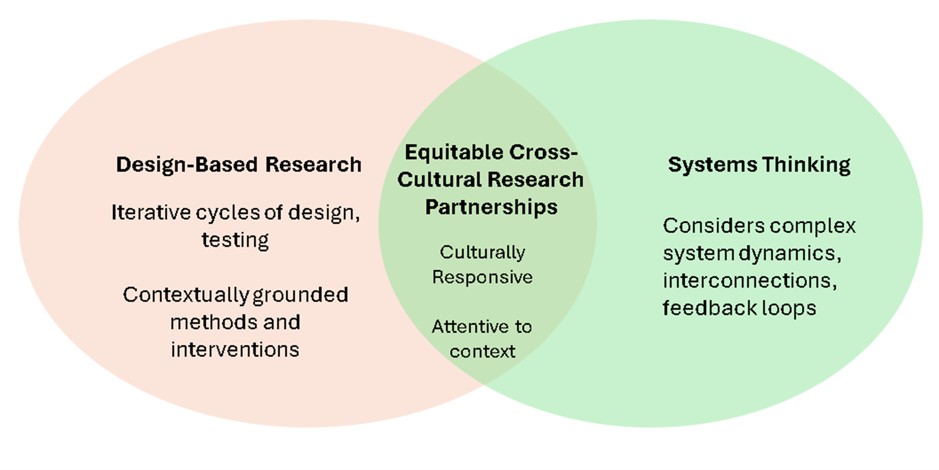
Figure 1: Intersecting frameworks
Design-based research (DBR) employs adaptive cycles through which researchers and practitioners collaboratively identify problems, test solutions and refine tools. DBR processes help ensure that solutions are not only effective but also sufficiently feasible and responsive to local needs to be scaled effectively. DBR emphasises balancing flexibility for local adaptation with adherence to core principles that preserve an innovation’s conceptual foundation.
The second conceptual framework that informed our collaboration was Systems Thinking. Scaling innovations requires attention to systems-level dynamics. It must consider how innovations, such as new research and evaluation tools, interact with or align with existing programme and system priorities – for example, their alignment with how education programmes currently monitor instructional quality, what indicators they prioritise, as well as what ministries emphasise in terms of curriculum standards and instructional approaches. Considering systems alignment also includes ensuring that data collected through the tools can be integrated into existing supervision, reporting and improvement processes rather than operating in parallel to them.
Practical application of the frameworks
Design-Based Research
Through earlier phases of the toolkit design, the NYU and RTI teams developed hypotheses about the essential aspects of adult-child interaction that promote children’s self-sustaining engagement in learning, resulting in a framework of four key ‘constructs’: Exploration, Agency, Personal and Social Connection, and Emotional Climate. For the development of the specific observation items under these constructs and to optimise the toolkit’s utility in various contexts, the research team and the implementing partners worked together through multiple interactive phases (see Figure 2) of workshops, data collection activities and debrief sessions, while attempting to balance funders’ and research partners’ expectations against the realities on the ground.
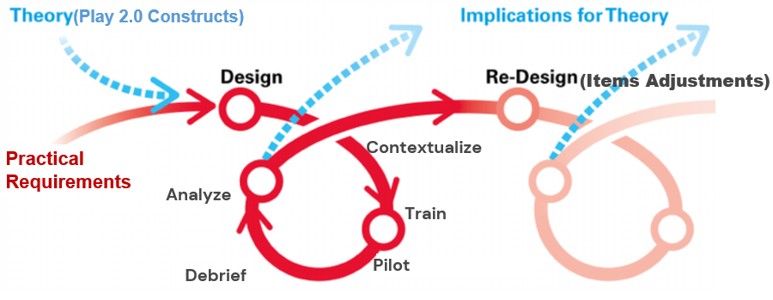
Figure 2: Interactive phases of Design-Based Research
Systems Thinking
Local experts and government officials from the education departments led the adaptation of the toolkit for their contexts, along with partners like Mukti Cox’s Bazar and SKUS in Bangladesh and Street Child of Sierra Leone (SCoSL). They provided key insights into how to score items effectively, set up protocols for dual-teacher classrooms and revise phrasing to ensure children’s understanding during interviews. Technical expertise from RTI, NYU and EDC ensured the integrity and rigour of the tools was maintained through procedures such as calculating observer agreement.
For scaling up of the validated local versions of the Engage toolkit, we have been in discussions with local education actors in both countries. In Sierra Leone, we are working with the Ministry of Basic and Secondary School Education and the Teaching Service Commission to incorporate insights from our data into pre-service and in-service teacher training and observational elements to enrich monitoring visits by School Quality Assurance Officers. In Bangladesh, we are advocating with local actors, including local government and non-governmental organisations in the refugee camps, to inform education policies and embed new practices to enhance holistic learning in the refugee schools.
This collaborative, cross-cultural education research produced several notable successes. Through bi-directional knowledge exchange, partners strengthened their capacity to support quality teaching and research, developed a shared understanding of what ‘high-quality instruction’ means across contexts, refined practical tools and training materials for low-resource settings, and generated data that accurately reflected classroom realities.
At the same time, the learning process was shaped by challenges related to the significant time and resources required for iterative research. The collaboration underscored the importance of embedding relevant expertise in local teams early in the process, as DBR demands continuous efforts of technically-skilled individuals. Moreover, balancing fidelity to core research principles and concepts on the one hand, with a rich appreciation of contextual nuances and constraints on the other, required at times painstaking negotiation between teams of researchers and local partners. We aim to codify our collaborative research experience into more detailed adaptation guidelines that can support future adopters of Engage to navigate such challenges.
Conclusion
Rather than focusing just on a joint outcome, equitable research partnerships must be defined through commitment to a process that prioritises meaningful partner contributions and mutual learning from start to finish. By leveraging local expertise into research co-design, thoughtfully scaffolding capacity and ensuring transparent communication and feedback loops, we promote authentic and durable local ownership. This approach transforms education research from a short-term extraction model into a long-term investment in sustainable systems-level change.