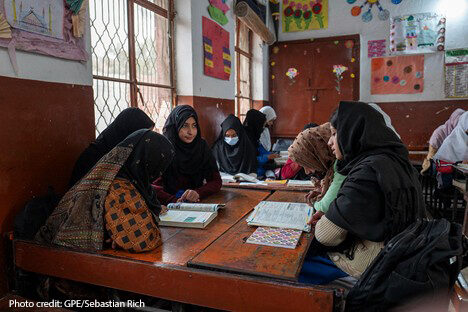
This blog was written by Sahib Madad, MPhil Education student at the Aga Khan University, Institute for Educational Development, Karachi, Pakistan.
Introduction
This blog presents a reflective analysis based on my observation of a Social Studies class in an International Baccalaureate (IB) school in Pakistan. The aim of this observation was to understand how Social Studies is taught, how students engage with concepts such as society, culture, identity, citizenship and civic responsibility, and how the learning environment shapes critical understanding. The observation also helped me explore the strengths and challenges of Social Studies education in this context and possible ways to improve classroom practice.
Social Studies and critical understanding of society and culture
My observation of the lesson showed that the IB Social Studies curriculum places strong emphasis on inquiry-based learning. The teacher encouraged students to ask questions, explore causes of events, and compare different viewpoints. This approach reflects IB’s focus on developing internationally-minded learners who can understand multiple perspectives.
Class discussions encouraged students to reflect on cultural diversity and social change. Students compared social norms from different regions and examined why societies follow different systems. This type of dialogue helps students build cultural awareness and recognise global interdependence, which aligns with principles of global education.
However, the lesson materials heavily depend on global context rather than local examples. Although this supports global understanding, it limited the chance to connect learning to Pakistan’s cultural and historical context. Scholars claim that meaningful Social Studies learning requires a balance between global and local content so that students can relate concepts to their lived experiences.
Critical understanding of environment and contemporary issues
Environmental issues were discussed through multimedia resources. Students analysed pollution patterns in different countries and discussed possible solutions. They were encouraged to understand the links between human actions, environmental change and policy responses. This type of critical engagement is essential for fostering environmental citizenship.
Students demonstrated curiosity and confidence in sharing ideas, which showed that the inquiry model supports open thinking. At the same time, the examples provided were mostly international, with limited focus on Pakistan’s environmental challenges. For deeper understanding, students need exposure to local issues, such as water scarcity, deforestation or waste management. Research also shows that connecting global issues to local realities strengthens students’ problem-solving skills and sense of responsibility.
Identity formation in classroom discourse
Identity formation emerged as an important theme during the observation. The class highlighted global identities such as global citizen, responsible human or religious identity. This connects with IB’s emphasis on international mindedness. Students were also encouraged to see themselves as part of a global community and to appreciate global diversity.
However, the discussion did not include local or national identity in depth. Scholars note that global citizenship education can sometimes risk overshadowing indigenous knowledge and local identity if not balanced carefully. In Pakistan’s context, where cultural diversity and local histories are rich, Social Studies should help students develop both global and local identities. A balanced model can support students in understanding themselves, while engaging with the wider world.
Citizenship and civic responsibility
The Social Studies lesson promoted skills linked to citizenship and civic responsibility. Students discussed concepts such as fairness, rights, equality and responsibility. They were encouraged to participate respectfully and listen to classmates, reflecting democratic classroom values. Such activities relate to participatory citizenship education, which emphasises active involvement and critical awareness.
The teacher also encouraged students to ask questions, explore sources and justify their opinions. This aligns with the IB goal of producing critical thinkers who can challenge assumptions rather than memorise facts. Students showed confidence in discussing current events, showing that the classroom environment supported open dialogue.
However, the concept of citizenship was framed mostly in global terms. There was limited conversation about constitutional rights and civic duties within Pakistan. Literature on citizenship education argues that students should understand the national legal framework and the role of citizens in their local contexts. Including these elements would strengthen students’ understanding of how citizenship functions at different levels.
Strengths observed in the teaching of Social Studies
One of the major strengths of the classroom was its inquiry-based approach. Students were active participants, and the teacher encouraged them to construct their own understanding. The use of open questions, group discussions and visual materials supported engagement in the class. Another strength was the emphasis on critical thinking. Students challenged ideas, offered evidence and debated perspectives. Research shows that inquiry-based Social Studies supports long-term civic understanding and promotes reflective thinking.
The classroom environment was inclusive, and students were treated as responsible learners. The teacher guided discussions without dominating them, which supported student agency. This aligns with constructivist approaches to Social Studies that view students as co-learners in the classroom.
Challenges observed in the teaching of Social Studies
A major challenge was the limited integration of local and national content. Although the curriculum promoted global perspectives, students did not engage deeply with Pakistan’s social, cultural and historical contexts. Scholars argue that overreliance on global frameworks can contribute to a Eurocentric orientation and weaken contextual relevance.
Another challenge was the lack of explicit focus on local civic responsibilities. The classroom emphasised universal values but did not fully explore how citizenship practices function in Pakistan. Without local grounding, students may find it difficult to apply their learning to community issues.
Finally, while critical thinking was encouraged, some activities remained superficial. Students had opportunities to question and debate, but there were few structured tasks that required deeper analysis, research or problem-solving.
Possibilities for improvement
The Social Studies programme can be strengthened by integrating more context-specific content. Including local case studies, national issues and cultural narratives would make learning more meaningful and support identity formation. Teachers could also use project-based learning to connect global issues with local realities. For example, students could investigate a local environmental problem or conduct community interviews.
Professional development for teachers can further support culturally-relevant pedagogy and balanced global-local integration. This would help maintain IB’s global outlook while honouring Pakistan’s context.
Conclusion
The observed Social Studies class demonstrated a strong commitment to inquiry, critical thinking and global awareness. Students engaged actively and developed skills that support global citizenship. However, the lesson lacked a strong link to local identity, national citizenship and context-specific issues. A more balanced approach that includes local content, deeper analysis and community-based learning can enrich Social Studies education in IB schools in Pakistan. Such improvements can prepare students to participate thoughtfully in both local and global contexts.