This blog was written by Rachel Bennett, Managing Director, and Ben Durbin, Head of Impact, at the Raspberry Pi Foundation.
A place for computing education
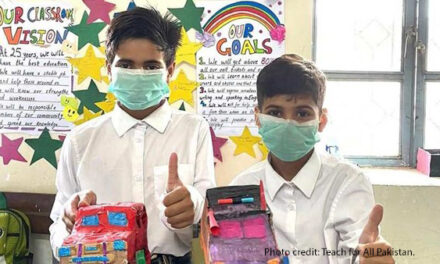
When the pandemic closed schools in Pune, in the state of Maharashtra, India, two teenagers — Jayantika (age 16) and Ruturaj (age 14) — turned to coding.
They joined their local Code Club, run by the Bidkar Foundation, which provides coding opportunities for young people in rural areas of Pune. That moment opened a door to creativity neither of them expected. Coding projects and problem-solving soon filled their weekends, and their sense of confidence and excitement began to grow.
Computing technology is rapidly changing our world. For many, this is a change for good, opening up new, exciting opportunities for teenagers like Jayantika and Ruturaj. New technologies bring huge potential to tackle poverty, disease and inequality.
However, technological change is also widening existing inequalities, leaving behind people who are already disadvantaged. At the Raspberry Pi Foundation, we believe that all young people deserve a high-quality education in computing and digital technology. Alongside foundational literacy and numeracy, this is essential in equipping young people to be able to shape their futures and to have a powerful voice about the role technology plays in their lives.
Last year, we were proud to become members of UKFIET. Its vision of a more just world, created through education, underpinned by a large diversity of perspectives, aligns strongly with our mission and we are looking forward to participating in events, dialogues and collaboration.
Equipping young people for the future
We aim for young people to develop the knowledge, skills and confidence to use computers and advanced digital technologies in their work, community and personal life; to solve the problems they care about and to express themselves creatively.
Young people need to develop mindsets that enable them to confidently engage with technological change and to continue learning about new and emerging technologies. They also need the ability to critically evaluate digital technologies and their application — to design and use technology for good. This is especially important as artificial intelligence (AI), machine learning, robotics and automation change the way we live, work, learn and interact.
Our global mission focuses particularly on young people who cannot currently access computing education and those who come from backgrounds that are underrepresented in technology industries. We provide freely available curricula and classroom resources, software that supports teaching and learning, and professional development for teachers. Our resources and training are tailored for local contexts through collaboration with education partners. We also aim to inspire millions of young people to become tech creators through a global network of Code Clubs, online learning resources and challenges.
All of this is underpinned by research and refined by evaluation. We undertake research in collaboration with the University of Cambridge at the Raspberry Pi Computing Education Research Centre, to deepen our understanding of the teaching and learning of computing and advanced digital technologies.
Joining the UKFIET community
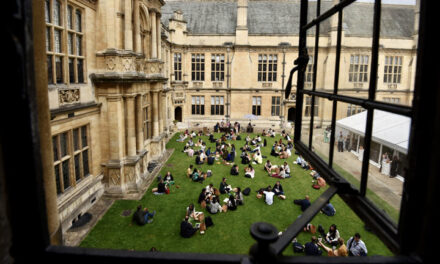
At last year’s UKFIET conference in Oxford, colleagues from our impact team were inspired and challenged by the experiences of other like-minded organisations, whose experiences mirror our own. For example:
- We heard from other organisations that aim to achieve scale through train-the-trainer cascade models of teacher professional development.
- We took notes from the experiences of working with partner organisations in the Global South, seeking to adapt and localise our content, act responsibly and avoid power imbalances.
- We were encouraged by the deep thinking on how to measure and impact on young people’s wider life skills.
As members of the UKFIET community, we are looking forward to continuing to learn from other organisations that share its vision and values. We would love to contribute what we are learning too, from working in dozens of countries across six continents, and to explore new collaborations.
From learners to leaders
Back in Pune, Jayantika and Ruturaj’s story did not end with them joining a Code Club — they wanted this same sense of excitement to be shared with others. And so, each weekend, they set out for nearby villages to bring coding opportunities to other children. What started with just one computer and seven students has now grown to five thriving Code Clubs reaching hundreds of children.
We want to see this story repeated in communities across the globe, enabling all young people to realise their full potential through the power of computing and digital technologies
You can read more about Jayantika and Ruturaj’s story here.