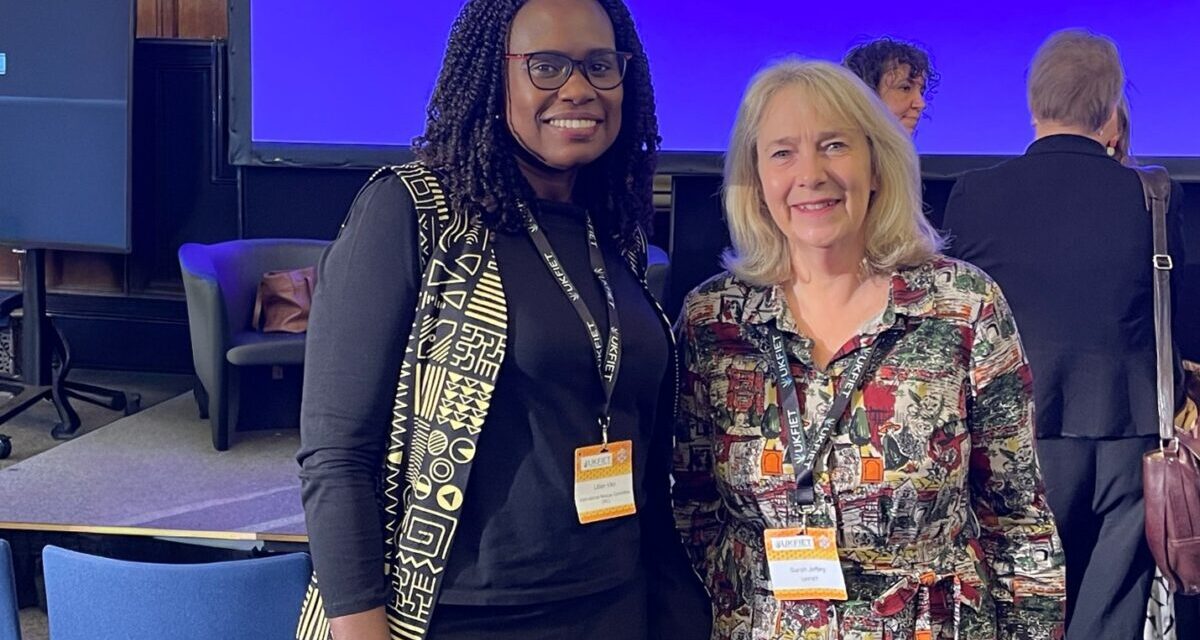
This blog was written by Lillian Viko, Senior Regional Policy and Advocacy Advisor with the International Rescue Committee (IRC) in Kampala, Uganda. For the 2025 UKFIET conference, a record 37 individuals from 15 countries, including Lillian, were provided with bursaries to assist them to participate and present at the conference. The researchers were asked to write a short piece about their research or experience of attending the conference.
When I attended the UKFIET Conference in 2025, it was my first time participating, and I could not wait to connect with people who care as deeply about education as I do. I felt genuinely excited and hopeful because the discussions reflected the issues I navigate every day in my work.
I support the PlayMatters project, a $100 million LEGO Foundation-funded initiative led by the IRC in partnership with Plan International, War Child Alliance, the Behavioural Insights Team (BIT) and Innovations for Poverty Action (IPA). PlayMatters works to strengthen education systems in refugee and host communities by equipping pre-primary and primary educators with the skills, support and tools to use Learning through Play as an active, child-centred teaching and learning approach. The project was launched in 2020 by the Ministries of Education in Ethiopia, Tanzania and Uganda, and runs until March 2026, with potential for continuation.
The project aims to improve holistic learning and wellbeing for more than 800,000 children aged 3-12+ across the three countries. These children have experienced displacement and crisis, yet they deserve the joy and quality of learning that every child should receive. My role involves providing leadership for the teacher professional development component, ensuring educators are equipped to integrate play-based methodologies into early childhood and primary classrooms. We also work with national education systems to embed PlayMatters pedagogy into government structures for long-term sustainability and scale.
Global crises have pushed the number of displaced children to record level. According to UNHCR, Children account for 30 per cent of the world’s population, but 40 per cent of all forcibly displaced people. Governments, NGOs, UN agencies and donors continue to respond, yet evidence on scaling education innovations in conflict-affected contexts remains limited. With shrinking global education funding, cross-sector collaboration at scale is essential to achieving SDG4: quality education for all.
A recent PlayMatters study, based on interviews and focus group discussions with 58 stakeholders across Ethiopia, Tanzania and Uganda, explored what it takes to scale effectively in humanitarian settings. Findings pointed to the need for sustained coordination, long-term handover strategies, and demonstrated impact to create an enabling environment for scale. Participants emphasised that successful scaling requires:
- Meaningful stakeholder engagement and shared understanding of PlayMatters’ objectives and Learning through Play (LtP).
- Alignment on challenges, opportunities and policy priorities that support LtP integration.
- Formalised collaboration with the government for content development and continuous feedback.
- Integration of LtP into policies and programmes through standardisation, digital systems and coordinated scale pathways.
- Ongoing evidence uptake to sustain engagement beyond the project lifecycle.
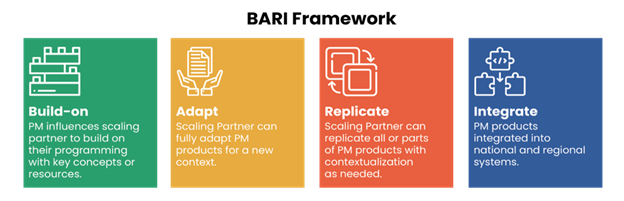
From these insights, we developed the Build-On, Adapt, Replicate, Integrate (BARI) Framework to guide scale through ministries of education, humanitarian and development organisations, universities, schools, districts and communities. BARI allows stakeholders to choose scale options suited to their financial, human resource, mandate and operational capacity. To date, PlayMatters has reached more than two million children across Ethiopia, Tanzania and Uganda through these scale partnerships.
By early 2025, humanitarian aid funding had shifted significantly. Widespread cuts to donor commitments forced organisations to prioritise essential services, leaving education lower on the priority list. This makes platforms like UKFIET even more crucial as they provide space to advocate, learn and engage with like-minded practitioners, while strengthening strategies that can transform education systems.
Attending the UKFIET conference was more than a learning experience. It was an opportunity to build purposeful networks with academics, practitioners and funders committed to scaling impact. It reaffirmed a shared movement that prioritises education for all and celebrates progress made in reaching marginalised children. These engagements will continue to strengthen efforts to institutionalise proven innovations within national and humanitarian education systems, ensuring sustainable transformation across East Africa and beyond.